

Plus Practical Tips Contractors Can Start Using Now
Seasonality isn’t a mystery. After 15 years of analyzing lead data across thousands of campaigns and industries, we’ve learned that demand ebbs and flows in reliable rhythms, but only if you know where to look and how to plan for it. In this post, we’ll explore what long-term lead data reveals about seasonal demand, how patterns have shifted over time, and what today’s lead generation trends mean for home service businesses.
Seasonality Is Predictable, But Never Static
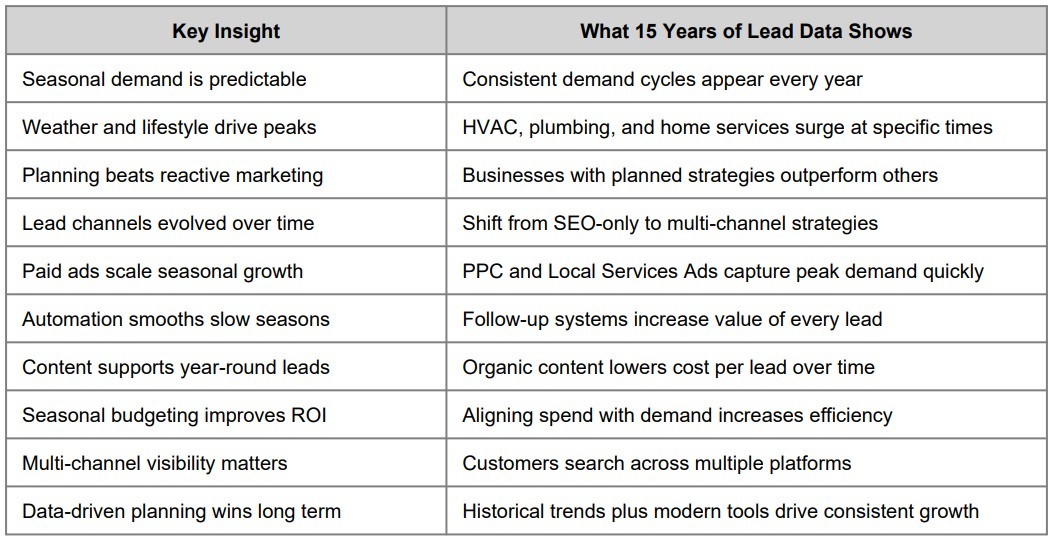
Looking back at 15 years in the lead generation industry, one thing is clear: seasonal demand isn’t random. It’s rooted in consumer behavior, weather patterns, and real-world needs. For example, HVAC services see predictable spikes in both hot summer months and cold winter months, while plumbing and other services jump during specific temperature extremes. This aligns with broader research showing that seasonal search behavior for home services fluctuates significantly. “AC repair” and “heating system repair” searches can surge hundreds of percent depending on seasonality. (WebFX)
Seasonal demand isn’t solely about weather, either. Cultural moments and holidays shape interest and engagement throughout the year. Trends in consumer interest often follow familiar patterns linked to celebrations, fiscal cycles, and lifestyle rhythms, meaning savvy marketers can anticipate and prepare for them.
What 15 Years of Lead Data Shows Us
From our earliest days focusing on organic SEO to today’s multi-channel campaigns featuring paid ads, automation, and nurturing, seasonal demand has always been a major driver of lead volume achieved by the 99 Calls pros. In What We Learned from Generating Over 1.4 Million Leads, we reflected on how our strategies evolved to adapt to changing market conditions and client needs over time.
Here are a few patterns that stood out in our data:
- Seasonal swings are real, but they vary by service category. Some niches have rigid seasonal cycles, while others see more consistent demand year-round.
- Peak periods often coincide with weather or lifestyle triggers like spring home maintenance season or pre-winter prep, where demand spikes and conversion rates improve.
- Businesses that plan their marketing around these predictable cycles tend to outperform those with ad hoc strategies.
Looking at broader industry data, content marketing and organic search remain strong drivers of leads and can help smooth out seasonal dips when paired with paid campaigns.
How Things Have Shifted Over Time
Over the last decade and a half, the tools and channels that drive lead generation have changed dramatically. Back in 2010, organic SEO and simple websites were powerful. Today, dominating the first page of search often requires a mix of Local Services Ads (LSA), PPC campaigns, strong business profiles, and quality organic content.
This evolution matters for seasonal planning because:
• Paid channels allow you to scale quickly into peak periods without waiting for organic traction.
• Automation tools and AI improve lead nurturing and follow-up, which is especially useful during slow seasons when every lead counts.
• Multi-channel strategies help capture interest wherever it happens, from social search to email and beyond.
Trends That Matter in Seasonal Lead Generation Today
Here’s what current lead generation trends mean for your seasonal planning:
• Seasonal budgeting is now a best practice: Align your lead gen media spend with known peaks and valleys to maximize ROI rather than spreading it evenly all year.
• Consumer behavior continues to shift online, with more homeowners beginning their search on digital platforms, so staying visible during off-peak times pays dividends.
• Seasonal email campaigns, promotions, and value-add content dramatically increase engagement and lead capture when timed with customer intent cycles.
Turning Seasonal Peaks into Year-Round Growth
Seasonal demand doesn’t have to mean feast-or-famine. The most successful home service businesses we work with treat seasonality as a planning tool, rather than a problem. They use past performance to forecast campaigns, tailor messaging to real demand cycles, and adjust spend dynamically.
Just as we discussed in Year-Round Revenue: Seasonal Strategies for Small Business Success, staying proactive and aligning offers with customer needs helps businesses stay booked throughout the year, even in slower seasons.
Putting Data to Work – How to Maximize Growth
Seasonal demand creates real opportunities for contractors who plan, rather than react in the moment. With the right data, seasonality becomes less about guesswork and more about timing, budgets, and strategy. The most successful businesses use predictable demand cycles to adjust bids, scale budgets when returns are strongest, and protect spend when demand softens. The following action items outline practical ways contractors follow seasonal trends to make smarter business growth decisions throughout the year.
Seasonal lead generation action items for contractors
• Track weekly lead volume and close rates year over year to spot seasonal shifts early
• Increase target CPA during peak times when close rates and average job values are strongest
• Reduce daily budgets during slower periods while maintaining visibility on high-intent channels
• Bid higher on emergency and high-urgency services, especially during seasonal spikes
• Refresh ads, landing pages, and call scripts to match seasonal customer needs
• Ramp budgets and bids 2–4 weeks before historically busy seasons
• Confirm staffing and call-handling capacity before scaling spend
• Use off-season performance data to plan next year’s seasonal budgets and bid targets
In Closing
After 15 years of watching seasonal demand play out in lead data, one truth stands out: those who plan with intention win. Seasonal patterns are powerful indicators of customer behavior, but they only pay off if you act on them strategically.
Looking ahead, combining historical demand patterns with emerging lead generation trends, like AI-enhanced targeting, omnichannel campaigns, and smart budgeting, will be key to capturing more leads and growing your business consistently, no matter the time of year.